Loading...
» Show All «Prev «1 ... 6 7 8 9 10 11 12 13 14 ... 19» Next»
Gee of Hull
HenryL5’s son WilliamL6 may have been the first Gee to move from Rothley to Hull. (See history of Gee of Rothley.) Or perhaps HenryL5 moved to Hull and WmL6 was born there.
Hull was the port where Leicester wool was unloaded from the small craft that could navigate the small rivers Trent and Soar, and reloaded onto ocean-going ships that could cross the English Channel to Flanders and other destinations on the Continent. Hull was mandated as a port through which wool must ship to insure collection of the Royal tax on wool.
The fifteenth century had marked the birth of a manufacturing class in England. For the first time, industry was proving more attractive than husbandry.
York and nearby Beverley and Scarborough were centers of weaving from shortly after the Normans arrived. However the real expansion in woolen cloth export was 1350 to 1500.
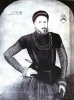
WilliamL6 emerges as one of the more interesting figures in Gee story. He was likely born around 1520. He became a master mariner in Hull. There he married Elizabethe, daughter of Walter Jobson of Hull, so if his father did not move to Hull, then WilliamL6 must have moved there fairly young.
William became a very successful wool merchant. One source has him a Merchant of the Staple. There were only a few dozen in all of England, so this would have been a significant position. To simplify taxation, wool at that time could only be exported by a Merchant of the Staple. (The “staple” in England was wool, two thirds of all exports at the time. Staplers bought and sold raw wool. Clothiers or drapers manufactured woolen cloth and sold it to tailors.)
Leicester was not a staple town until the late sixteenth century but York had been from 1298. And all York wool was required to pass through Hull.
A career in export must have been challenging. We do not know where he traded, but Flanders was the great seat of weaving in Europe. There are numerous de Gee today in the Netherlands.
William’s trading began under Henry VIII. Henry had been excommunicated. Charles V held the Low Countries. Ireland took the opportunity to rebel. England itself threatened insurrection, with monks spreading the fire of what in Yorkshire and the North of England became the Pilgrimage of Grace. Henry confiscated the abbeys, sold their lands and with the proceeds built fortresses along the coast.
England had no navy, and invasion seemed imminent. English traders were plundered and their vessels taken or sunk. They survived by speed and wit, and needed to be armed.
Then France and Spain made peace with each other. One or the other was to execute the Pope’s sentence on Henry. An invasion fleet was collected; and Scotland joined.
These conditions became the initial impetus that led England to develop its sea power and ultimately for a considerable period its world dominance. Merchants armed their brigantines and sloops. Henry took Edinburg and Charles made alliances, but in 1544 the French gathered 300 ships at Le Havre.
The battle that followed was indecisive except that the Mary Rose, Henry’s flagship, sunk. Hot weather putrefied the food and water of the French and they simply withdrew.
By the end of Henry’s reign, merchants were opening trade as far as Russia. The Spanish extended the Inquisition to their port cities, arresting Englishmen as heretics. Protestants took revenge through privateering, which became an occupation for honorable gentlemen.
Under Mary, Calais was lost (1588). By the time of Elizabeth, the Reformation had destroyed the fishing trade. Eating beef or mutton on fish days became a test of faith. Chester had fished the Irish seas but left them to the Scots. Hull had fished Iceland but left it to the French. The fisherman had become privateers if not outright pirates.
Under Elizabeth trading with the Low Countries was perilous. The Duke of Alva was arresting every Englishman he could catch.
Success
William6 was heavily involved in public affairs and civic responsibility. He became Sheriff of Hull in 1560 and Mayor three times (1562, 1573 and 1582).
He was trading internationally, he may have been trading with the Hanseatic League. Many generations later one of the Gee of Hull was Stephen Gee of Elbring. At the time of William6, Elbring was a member of the Hanse however by 1619 their trading with the English had made them wealthy enough to leave the League and become independent.
As William6 became successful he began to acquire property. Likely he became interested in Beverley through its wool market. Beverley is a small town to the northwest of Hull that was long a center of weaving. We know from his will that he owned land in Beverley as well as in Hull.
He married twice, the second time to Elizabeth Jobson, by whom he had five children.
And as he became wealthy he grew benevolent. He endowed the rebuilding of Hull Grammar School. From the date of three stones let into the wall, the work appears to have been completed in 1583. He also founded a hospital for ten poor women.
In his will, dated 1603, he left £2,000 to his son William, £100 each to his other children and £50 to his grandchildren, which with his land and property as well represented quite a considerable fortune at that time. He also left two houses in the ‘Butchery’ (now Queen Street) for the benefit of the school, money to the poor in several cities, money for highway construction in several cities, for several churches, hospitals, even money for a party for his neighbors. Until quite recently there was still a William Gee School in Hull.
What was their connection with Henry Gee d. 1545, twice mayor of Chester? We know HenryL5 married the daughter of Cornelius Gee (a cousin?). We find “Cornesio” Gee in a land transaction in Rothley in 1537 and “Cornirio” Gee, described as heir and son of “Eustace Gee, yeoman”, in a quitclaim transaction in Rothley in 1567.
By the way this points to the name Cornelius as another name that recurs through the history of the Rothley line. HenryL5’s father-in-law Cornelius was one, the son of Eustace Gee, yeoman in 1537 was another, William7’s son Cornelius8 yet another, so at least three in the space of five generations of Gee of Rothley. And we saw earlier that Eustace’s house in Rothley was named “Chester House”.
| Latitude |
53.744341 |
| Longitude |
-0.332443 |
| ID |
4 |
| Linked to |
William GEE |
» Show All «Prev «1 ... 6 7 8 9 10 11 12 13 14 ... 19» Next»


 Find
Find Surnames
 Bookmarks
 Places
 Dates
Dates Cemeteries
 Search
 Photos
 Documents
 Histories
 Recordings
 Videos
 Albums
 All Media
 What's New
 Most Wanted
 Reports
 Statistics
 Notes
Notes Sources
 Repositories
 Contact Us
 Home
Home Search
 Print
Print Login
Login Add Bookmark
